
The Cybersecurity Act - Turning Compliance Into Strategic Advantage

As cyber threats grow more sophisticated, Sweden’s new Cyber Security Act marks a shift in how organizations must protect their systems and data. The legislation raises the bar, making cybersecurity not just an IT issue, but a critical business priority.
From EU Directive to Swedish Law
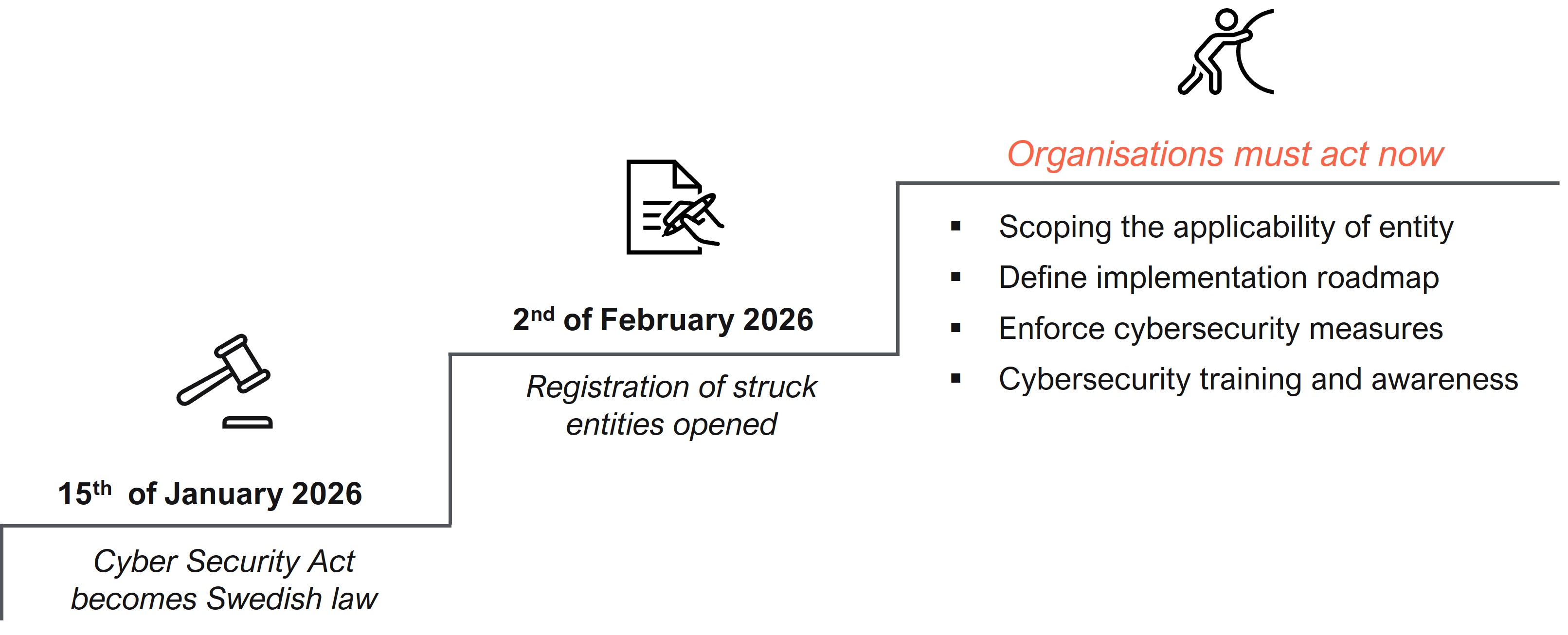
The EU’s NIS2 directive sets a unified standard for cybersecurity across member states, targeting critical sectors such as energy, transport, banking and healthcare, among others. In Sweden, this has been implemented through the Cyber Security Act, with a phased rollout during 2026 - introducing requirements for registration, incident reporting, supervision, and continuous security assessments.
Non-Compliance Comes at a High Cost
The new act introduces a strict enforcement regime with clearly defined financial penalties to ensure compliance.
“The fines for non-compliance range between 7-10 MEUR or 1,4-2% of annual turnover depending on sector allocation”
The act also places accountability on management level, where executives and board members may be subjected to suspensions from business activities if requirements are not fully met.
Cybersecurity as a Strategic Advantage
The path to compliance begins with defining the scope by assessing applicability of the organization and identifying critical assets, services, and risks. From there, organisations need to implement controls, establish incident reporting, and continuously strengthen their security posture, to which ISO 27001 can serve as a practical framework. The right implementation approach should be tailored to the organization's cybersecurity maturity and risk appetite.
“Cybersecurity is not optional in modern organizations – it is a strategic necessity”
Done effectively, cybersecurity becomes more than a legal requirement, but a way to reduce risk and build resilience by translating regulatory requirements into scalable solutions tailored to the organizational context - turning cybersecurity compliance into a strategic advantage.
